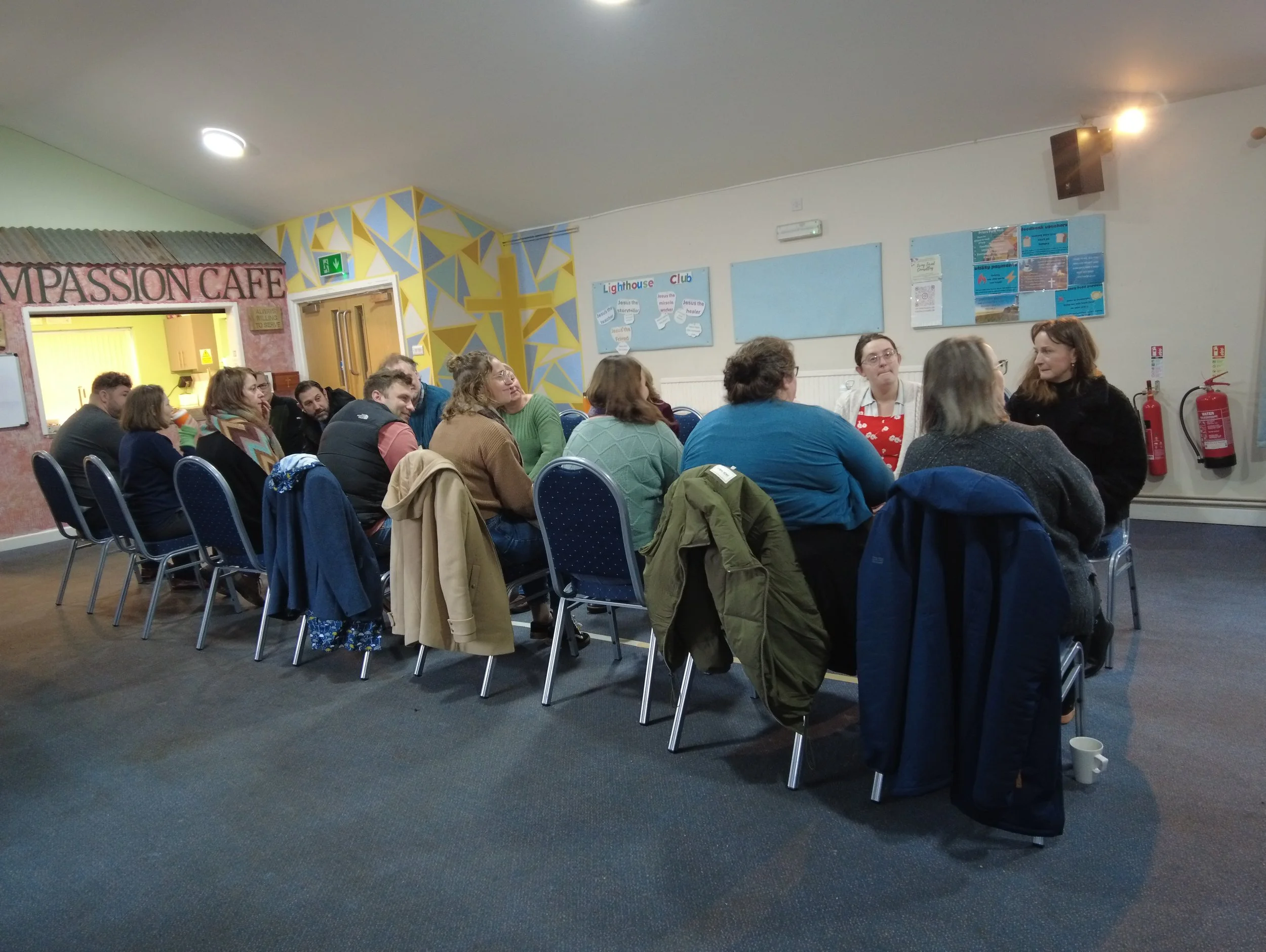
On Thursday 15th January I attended the fifth session of our Priors Park place workshops. This session saw us back at the community church with a couple of new faces. The focus of this session was to get to the bottom of what a place plan is truly asking for. A lot of this revolves around language and developing an understanding of where we need to draw influence from within the community to help shape it’s creation.
There was a big focus on engagement this session, the main discussion centring around how we can go about including residents and other stakeholders in our conversations.
As always, we started off with some introductory games, all aimed at breaking the ice in a fun way. This transitioned very well into our initial conversations around Priors Park, this time framed mostly as reflection. It’s important as we continue this process to avoid having the same conversations repeatedly as this will lead to stagnation. Asking questions like this at the beginning of the day allows us to re-tread old lines of thinking, highlighting what still feels unresolved or what feels most important to address in our discussions.
These are the questions we explored as a group, acting as a “learning swap”:
What’s one thing you’ve learned/ noticed about Priors Park that you didn’t know before we started?
What’s one thing you’ve learned about developing a place-based approach?
What’s one thing you’re still unsure about?
What’s one thing you think we should protect as we write a Place Plan?
These are a few of the answers we came out with:
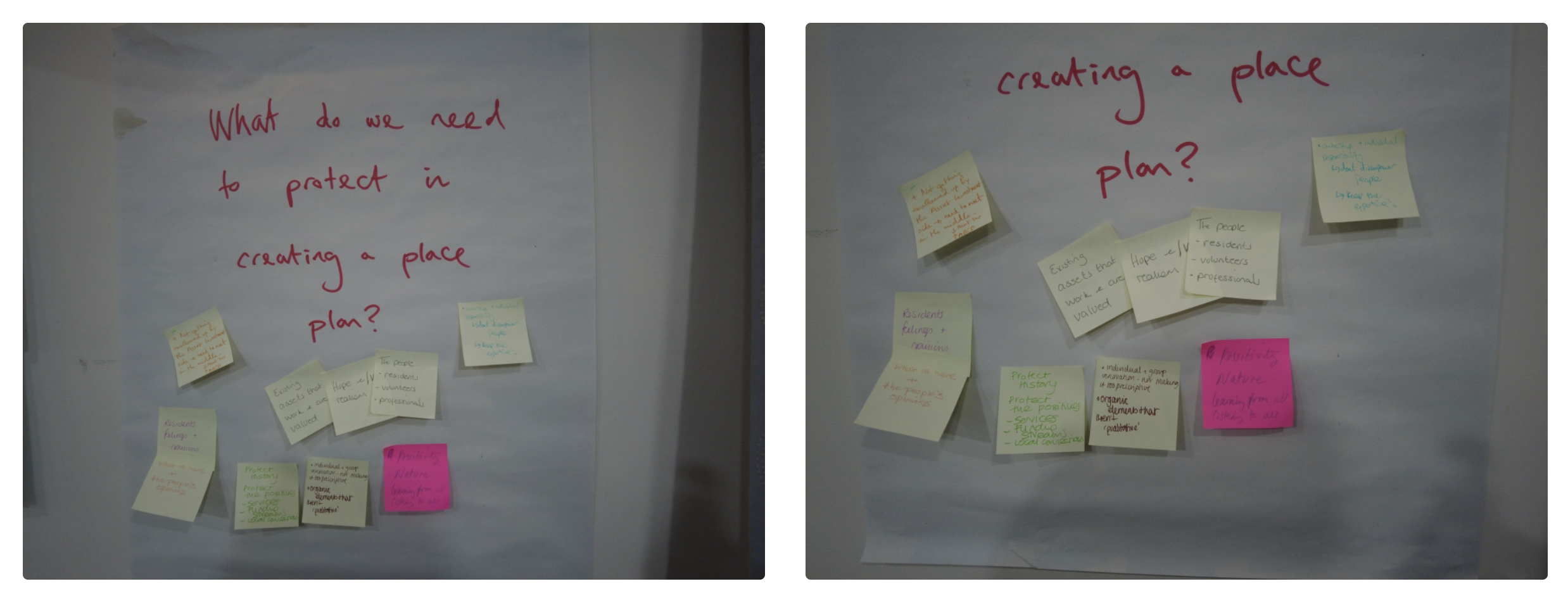
However the big question still remained of “Yes, these are OUR feelings, but what about the feelings of RESIDENTS?”
The next task was a more “word of mouth” focused activity that aimed to begin to address this question. We were split into 4 groups and members of each group who had had conversations about place and the work happening within Priors Park outside of the sessions were asked to feedback on the conversations they'd had, mainly addressing the following questions:
What did you notice when having the conversation?
What felt easy about it?
What felt awkward about it?
Was there anything that got in the way?
Post it notes were generated from this and then sorted into the following categories:
What helped
What got in the way
What we want to try next
Below are some of the results:
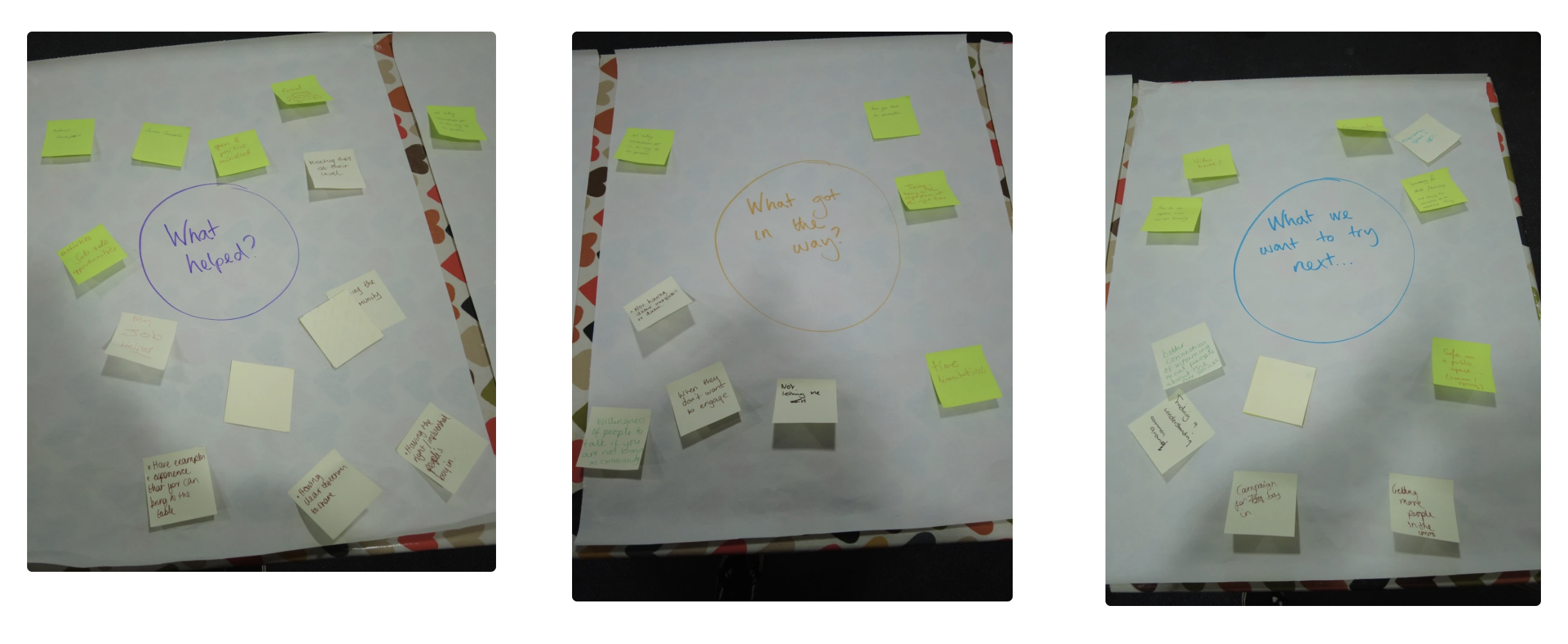
The hope here was to begin to pinpoint the areas of flow, as well as sticking points within the conversations we have about place so that we can begin to move past simply talking about it into inspiring engagement with it's vision. Storyboarding it like this allows us to see this transition visually, showing how we can navigate any stagnation within our conversations and get a better idea as to what really matters when we talk about it to others. An important quote from Rich on this segment:
“If you didn’t do it, that’s still valuable data. In place work, the barriers tell us as much as the stories.”
Next, we heard from South Lichfield place lead, Helen Minchin and Scheme Officer Team Leader Ashley Crapp. They both shared a little about their roles; Helen went more into depth on what being a place team lead is like and how it has shaped her journey into place-based working so far and Ashley discussed his own experience in applying an asset based community lead approach. Hearing from them both provided the rest of the group with first-hand accounts to take away about place which fulfilled an element of what they had thought helped create successful conversations around place which was “having first hand experience or examples". This also lead onto a larger point of where the buy-in from others would come in. It was identified in the previous task that the group felt “buy-in from influential people” was needed in order to make conversations around place work, however this task called in question who exactly is an “influential person”?
Yes - in many ways buy-in from leadership and the establishment of leadership roles like Helen's and Ashley's is a must as it will inspire trust and security in place-based working from others.
But, no - leadership does not automatically warrant influence and putting to much emphasis on leadership may find us looping back around into a top-down approach.
Instead Rich reframed Helen and Ashley as “critical friends”; people who are deemed bastions of knowledge in areas of interest through experience, so in this case place-based working and ABCD, who have an interest in sharing that knowledge and can rally others to do the same. This marks somewhat of the first breakdown of top-down thinking, where we acknowledge that whilst leadership is needed, it is not at the core of place-based working. That in the eyes of a bottom-up approach, leaders are part of the same community as everyone else but have the ability through their skillsets and knowledge to foster people's voices and mediate action, ensuring that people are seen, heard and valued for their opinions.
Pre-mortem (Future's Clinic)
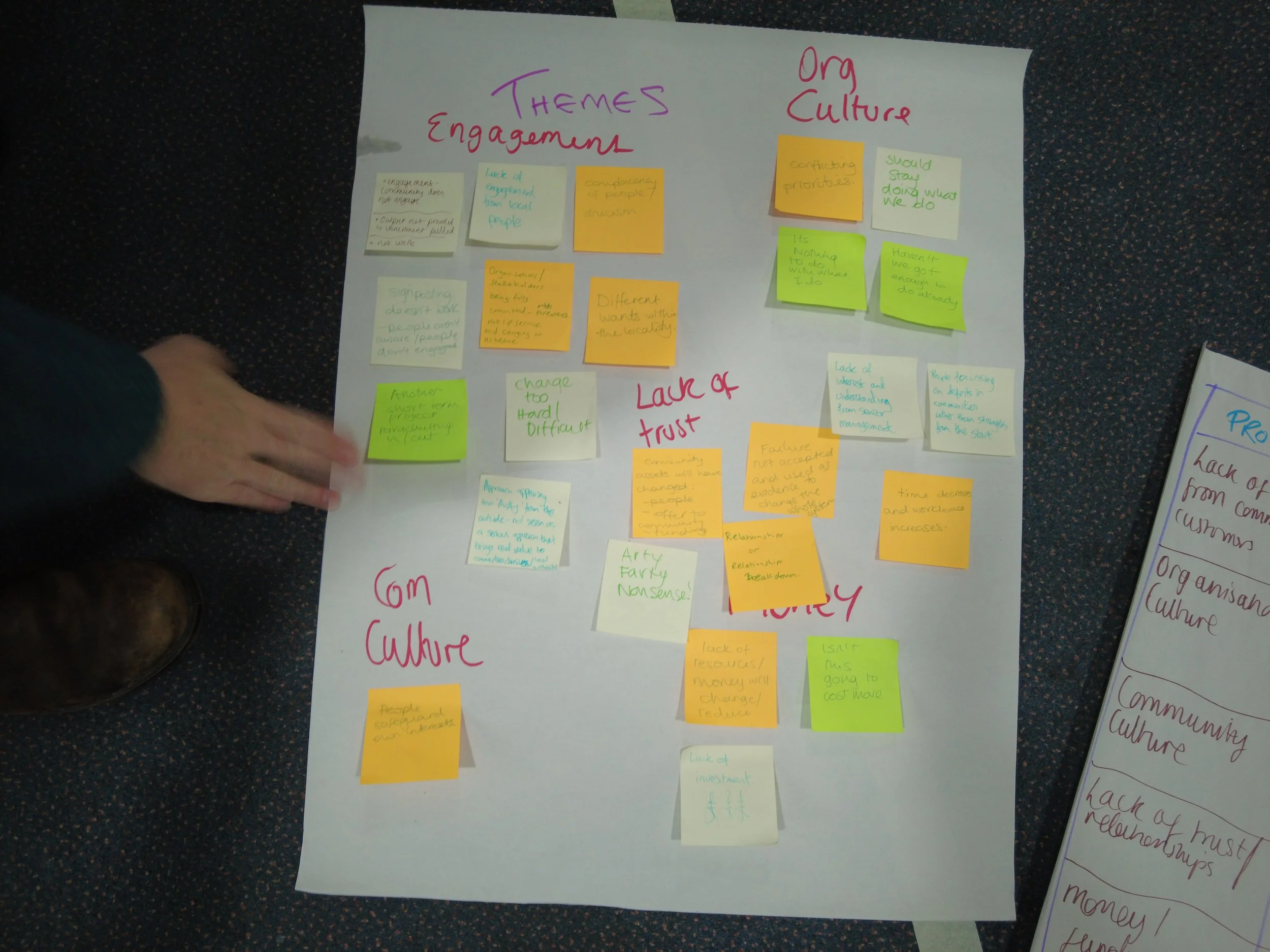
The first major task of the day was a pre-mortem which Rich described as us reverse engineering the solutions to problems by starting with them. Hence the first thing we asked ourselves was: “If this goes wrong - why will it be?”
We then grouped all of the problems and negativity into clusters through common themes. The picture to the right is what we came out with.
The themes that were identified were:
Engagement - that people don't want or believe in getting involved
Organisational culture - that organisational cultures are to adverse to change
Lack of trust - that promises will have unsteady foundations
Community culture - that communities already have eco-systems they will defend
Resources - that there will be a lack of investment and resources blocking things from happening
We were then split off into small groups to workshop each cluster and come up with solutions based off of the problems we found.
I was in the group for organisational culture. We identified that the main solution was exactly what we'd identified in the “critical friends” discussion. That it was about leaders walking along-side the project and aiding in the change of language/core values that would make the most difference.
We then had to look at what that solution may look like at varying points in the future like at; 3 months, 6 months and 1 year.
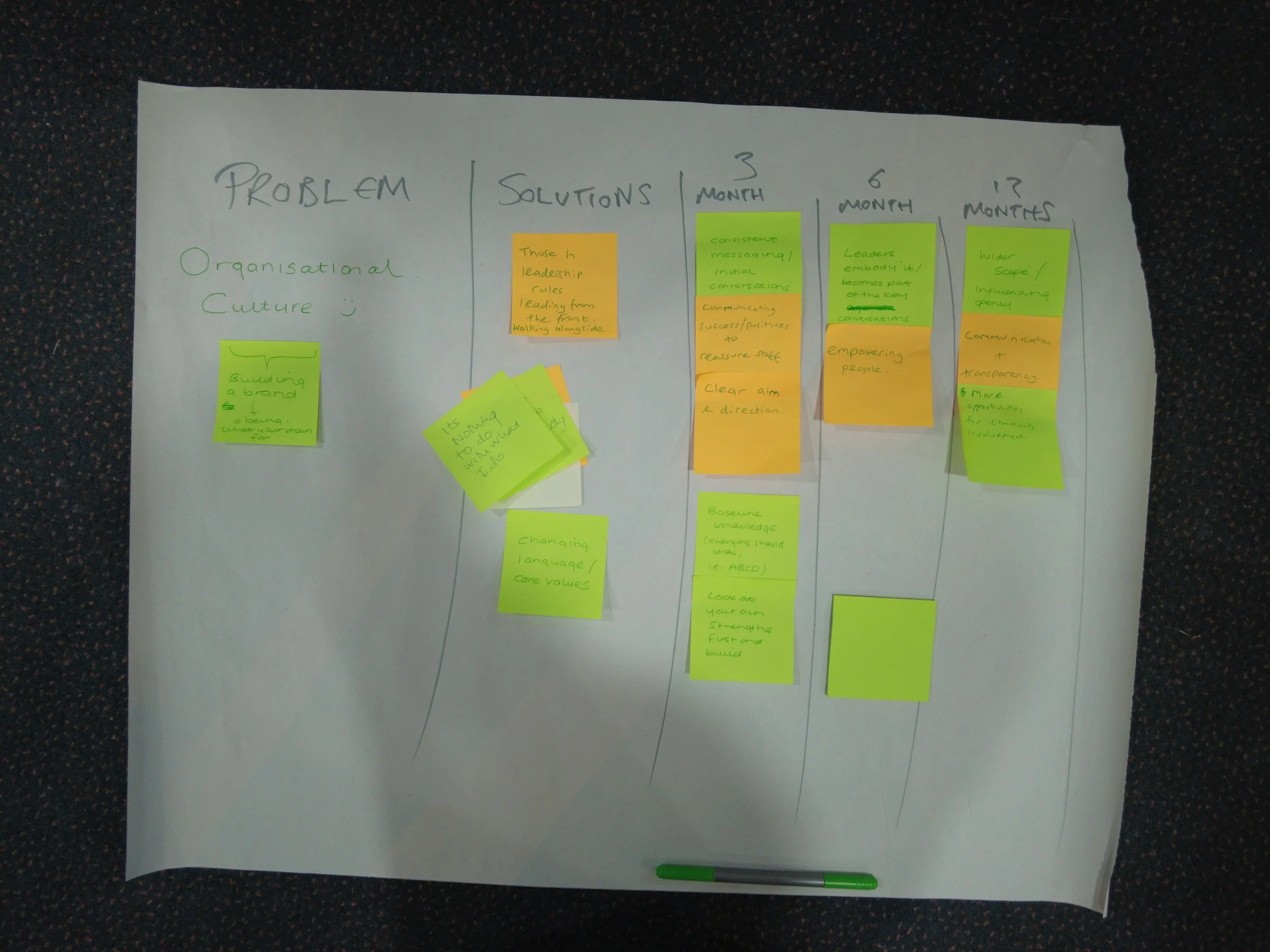
This is of course is a very simplified forward vision of a solution to a pretty complex problem but it does the job at capturing how we need to start thinking in terms of the obstacles we face within place.
Place Plan: Version 1
“We’re going to build a first draft Place Plan together. It won’t be perfect — it will be usable.”
The group was split in half, each one tasked to define what the purpose of the place plan should be, starting with the prompt “In Priors Park we want to…”. The only real parameters were that it had to be in clear, plain language, that it had to be community friendly and it had to be specific and not vague.
Below is what both groups came out with:
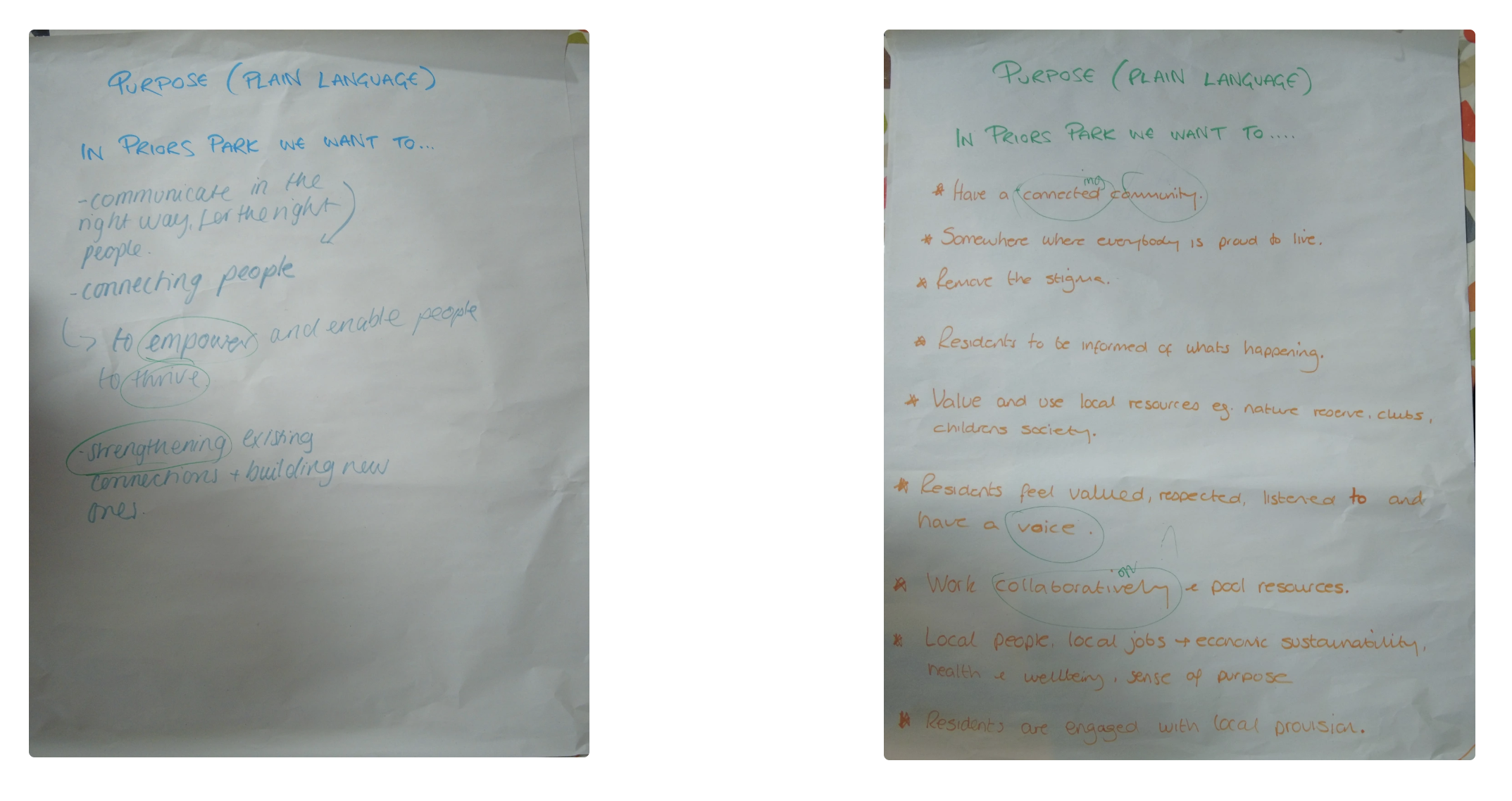
Then we were split off into 3 groups, each looking at doing something different with the ideas we'd generated.
Group 1: Was asked to simplify the purpose even further, taking both groups thoughts and combining them into one, clear definition, no more than a sentence or two.
Group 2: Was asked to come up with some principles that could help to give a broader perspective on how we work towards what we'd outlined as the purpose.
Group 3: Worked on our priorities moving forward, solid actions that will allow the purpose to come to fruition.
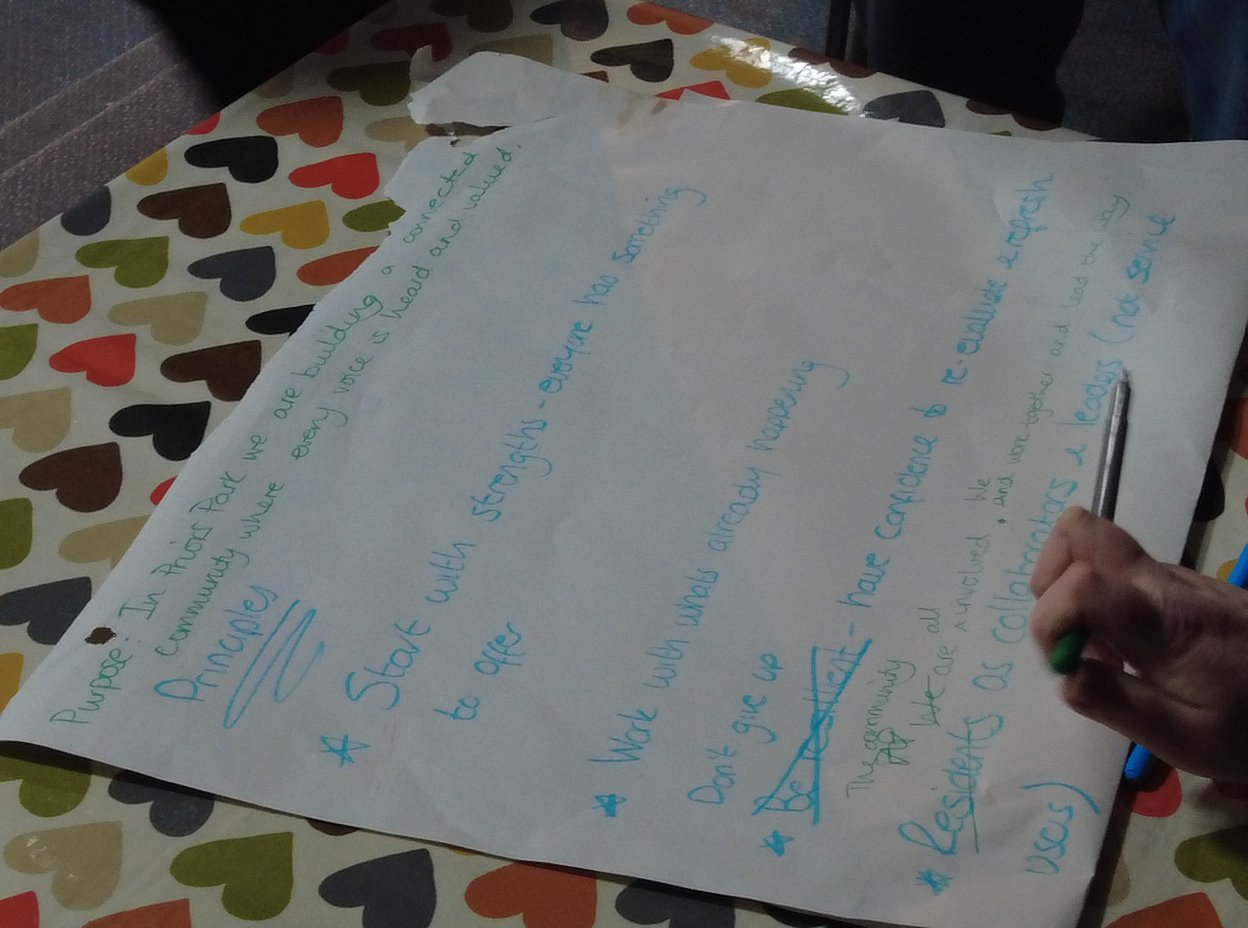
I was initially part of group 1. We started by circling key words in the sentences written by both groups to find the core messages. The next step was about foregoing or finding alternatives to any words that didn't quite feel right and simplifying what we came out with as much as possible.
Clear, plain language means something universally understood and using words that are to corporate or still imply a difference in power didn't align with that. For example; we changed words like collaborative to together and changed empower to build. After a few drafts we began to find the focus which was on the voice of the community and we came out with the following:
“In priors park we are building a connected community where every voice is heard and valued.”
Now that we had this, group 2 were invited over to present their principles and see how they compared against the narrowed down purpose. Both groups were entitled to suggest edits to eithers ideas to make them align better and some really good discussions were had. Most centred around the wording and tone of different elements and how they would look to someone outside of these sessions. The principles came out looking like this:
Start with strengths - everyone has something to offer
Work with what's already happening - networking is key
Don't give up - have the confidence to revaluate
Find common ground - lead with togetherness
Next group 3, who had been working on the priorities, arguably the most important part of the initial plan, fed back their findings. Instantly the priorities were less about concrete cause and effect and more about what olive branches could be put out there to encourage engagement with what we are doing and truly start progressing.
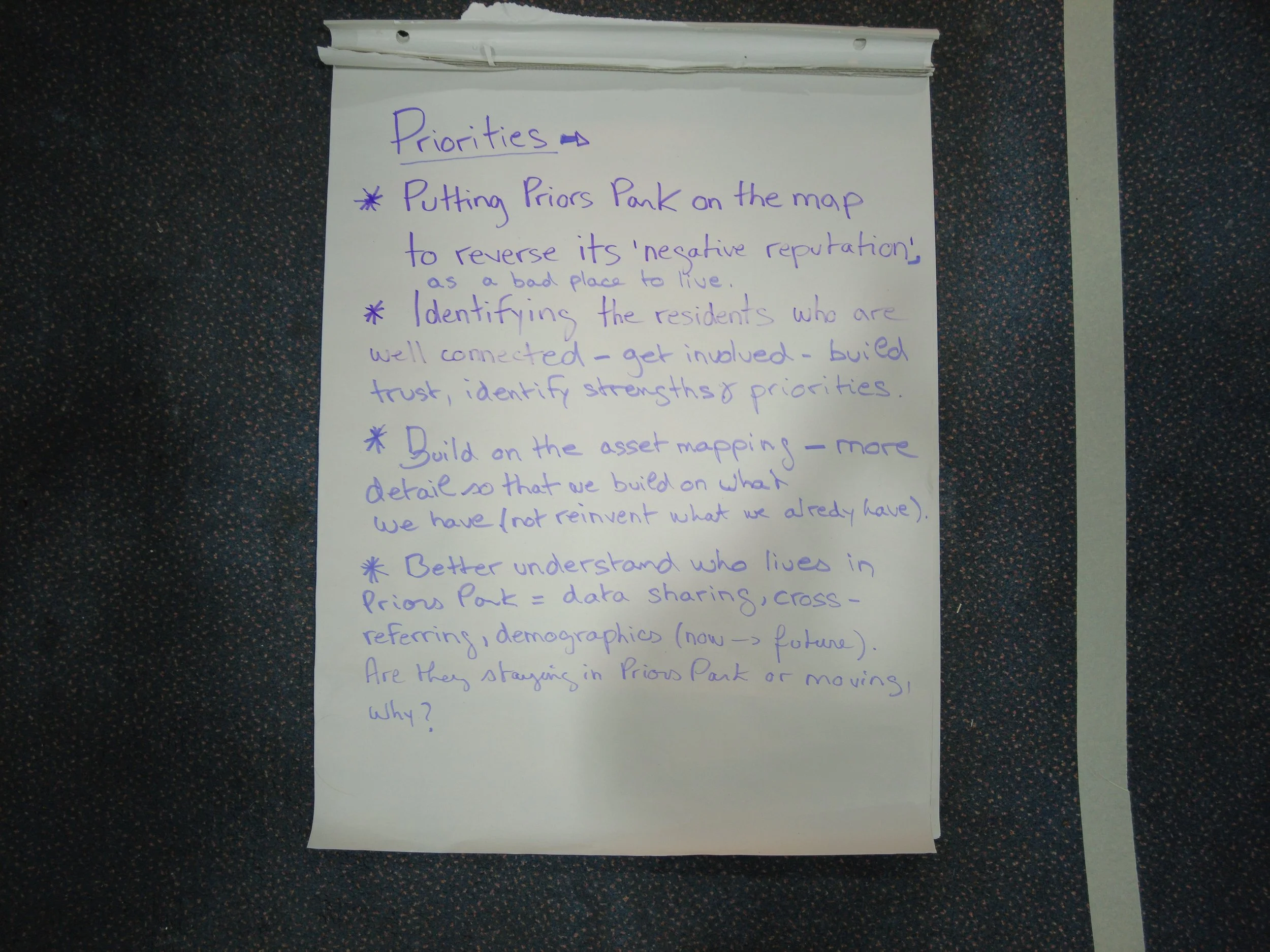
Once you combine all of the groups findings you come out with something like this:
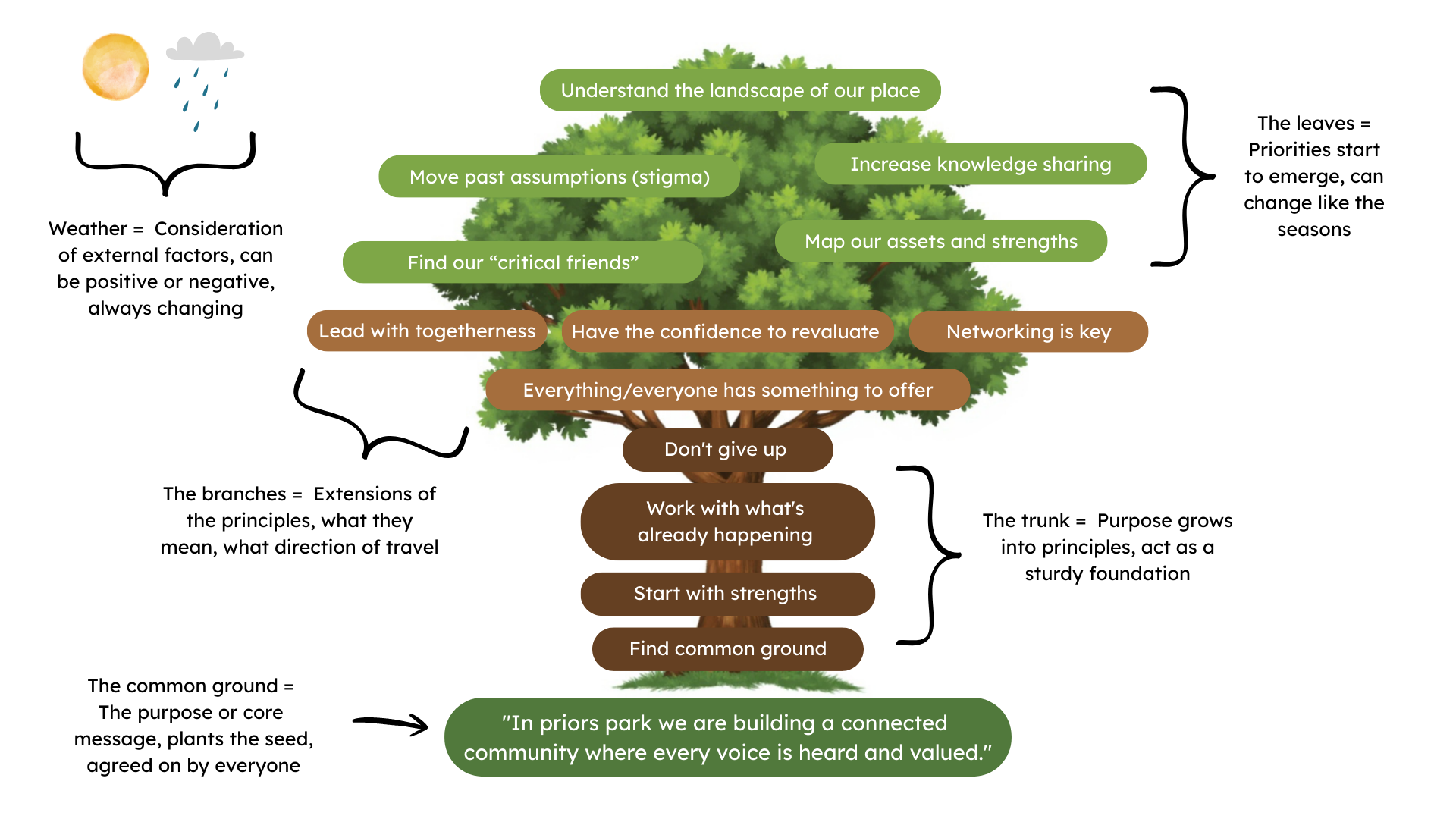
Yes, this is only a rough first draft but we are gradually starting to see a process take shape. However the main takeaway from this session was that this can't feel truly real without residents and other community members involvement. Despite this sessions group being a good 50/50 split of people who work in and around Priors Park and those who don't, it's evident that we can't settle on something like the above without the exact opinions our purpose centres around informing it. As a result, our homework for this workshop was to invite others within the community to come alone to our fifth session that's happening in February.
If you have any thoughts or questions in the meantime, please do drop a comment below or message me directly, any and all involvement is key to this developing. We are truly at the halfway mark now.