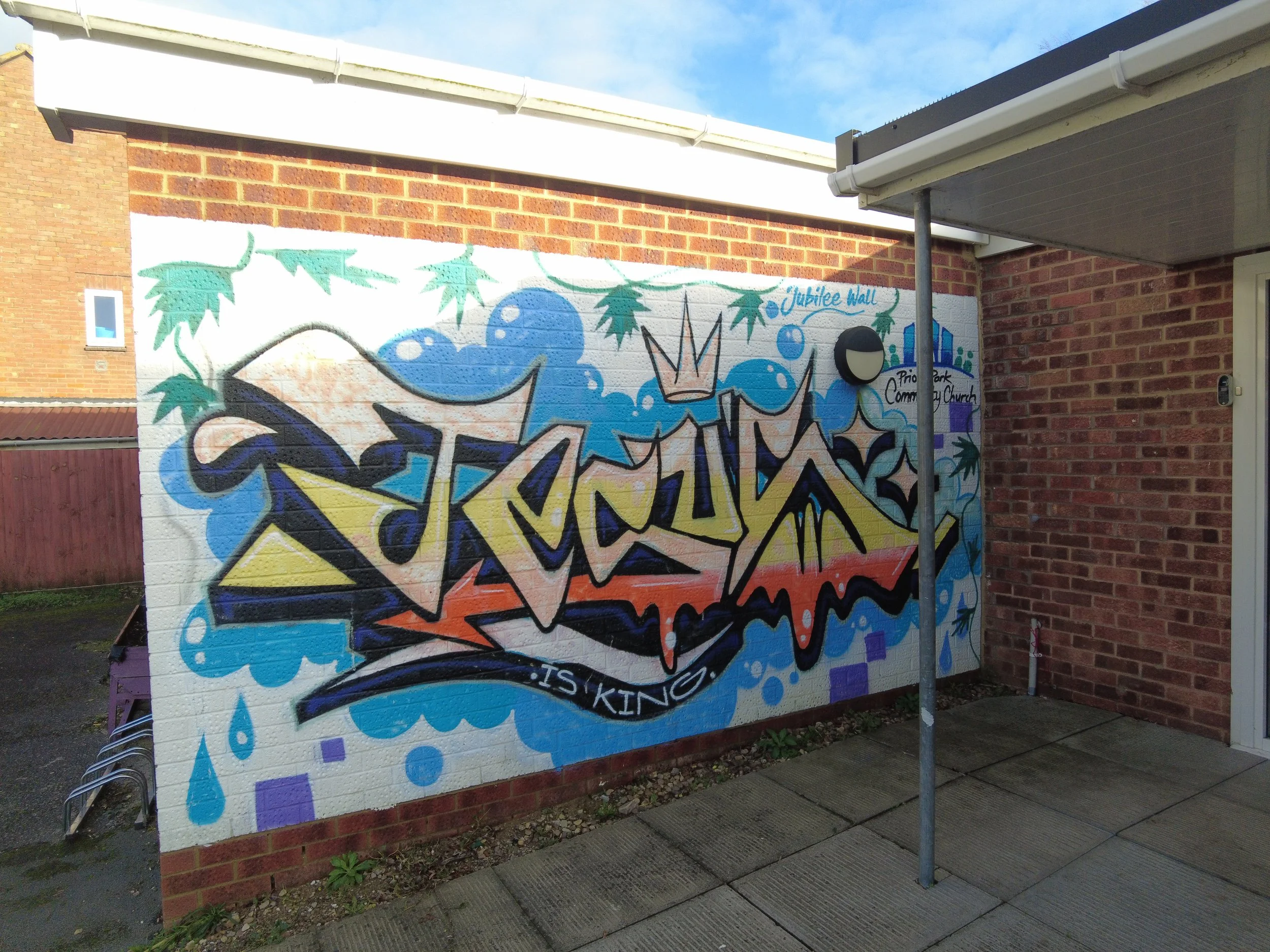
On Thursday 11th December I attended the third session of our Priors Park place workshops. This time we met at Priors Park Community church, a setting that last session was identified as a major asset for people within the community and was the hosting space for many local groups. A reminder as usual that if you haven't read the first two entries about our sessions so far you can below, as they both provide a lot of the context around what I talk about in this one.
As always the session was facilitated by Rich Holmes from Go Together and we were also joined this time by Emily Brady-Young, a realist researcher and the evaluator for this project. She described realist research as learning through storytelling and thought patterns. A more qualitative approach in comparison to what we are used to, which is more or less what place is all about. Less focus on metrics and more emphasis on what ideas are being born through our conversations and reflections, as well as how they are going on to fuel growth and weave a narrative around what we are trying to achieve.
The session kicked off with some “people bingo”. This built off what we did in the previous session on discovering capabilities and capacity within the team to do different tasks, again showing how even in small groups your skillsets can cover quite a large area.
Next, we did a short 15-minute walkabout in Priors Park. Despite everything else we did I would argue this was the most important part of the session. There is a good 50/50 split in our group of people who regularly visit, or work in Priors Park and people like me who don’t, creating a very useful teacher and learner dynamic as we discover more about the place. It’s this dynamic in of itself that will carry place forward which I will get into further detail later in this article. This task gave us a great opportunity to take Priors Park off of a map and visit the places we’ve been talking about physically, the garages that are due for demolition being a big centre of focus. The small group I was a part of was approached by a resident asking if we were “from Bromford” and giving his views on the garages upon noticing that we were looking around. He was very eager to express concerns, ranging from recent thefts and vehicle fires, to lack of light on the stretch of land the garages are on, to rubbish and bin management, as well as the condition of the garages themselves.
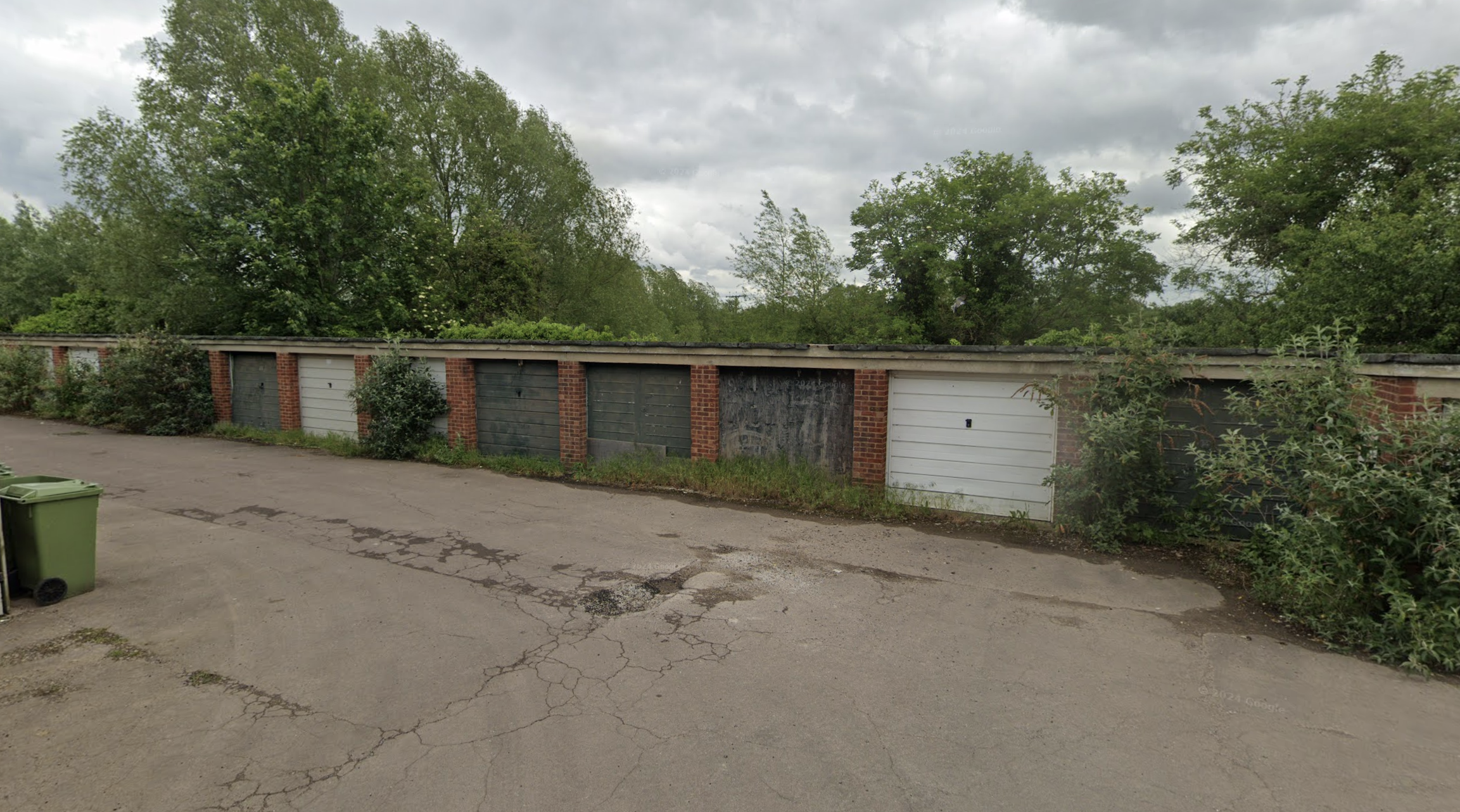
The man was very insightful and admitted to us early in the conversation that whilst he wasn't the person who had been directly effected by some of the stories he was telling us, he'd heard these concerns from his neighbours quite extensively and he felt he needed to take the opportunity to speak on it. This again raised the act of community championing. A lot of the time we obsess a little too much over official titles and customer engagement, our current ways of working likely citing this interaction as a case for him becoming a “community representative” or something similar. But as he spoke, it became quite clear that these types of conversations could be simple and are perhaps better had in passing, especially in environments where the residents feel comfortable to approach us first. He was simply talking about his daily life and what he sees/hears on a regular basis. It completely grounded the task, not needing a survey, clipboard or prompt from us to get off the ground.
After this we fed back on what we’d learnt and got our first look at an early-stage asset map using Padlet, put together by Rich. It took everything that we’d mapped out last session on flipchart paper and turned it digital, making it so we could hover over assets we’d identified and know what they were. Whilst a work in progress, it was exactly what we’d all envisioned in making asset-based knowledge more accessible and detailed.
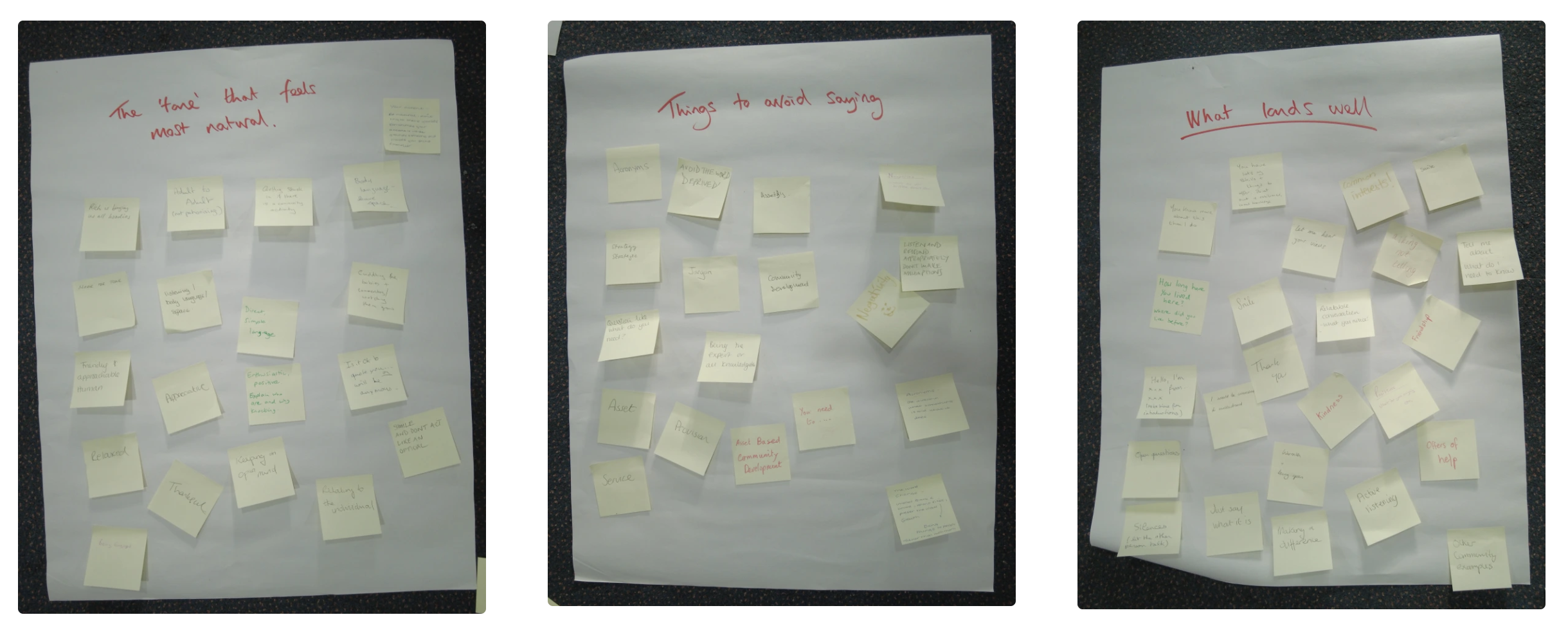
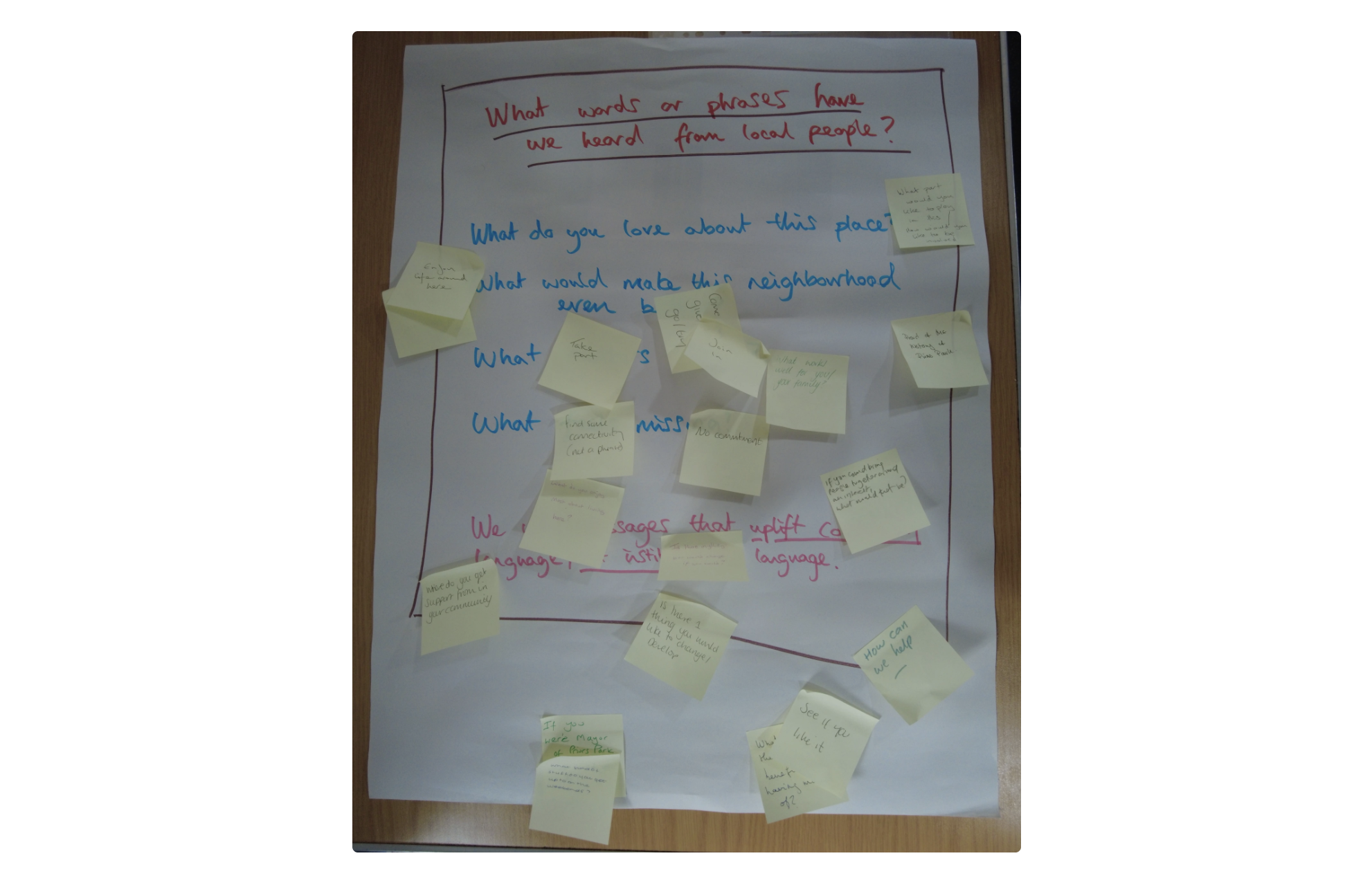
The second half of the session was largely focused around the language we are using when talking about Place. Rich noted that to spread this thinking and get customers truly involved we need to have a certain level of mindfulness when it comes to the conversations we have, perhaps stepping away from our usual script and finding one that lends itself better to the spirit of place. Here are a few of the answers we got:
The last part of the session covered collaboration and how you can start forming open conversations about topics of interest. This involved a hosting style system where someone with a question would host a group discussion that people could come and go from. There was no pressure or requirement to talk about something that didn’t interest you, as long as there were “golden nuggets” you could take away and turn into action. Many topics came up, such as ambitions born from assets like activities for vulnerable people, some were based around communication such as how we tackle historical differences in groups of people and how we can connect better with parents and children, another was focused on previously collected customer engagement data and how we better utilise it.
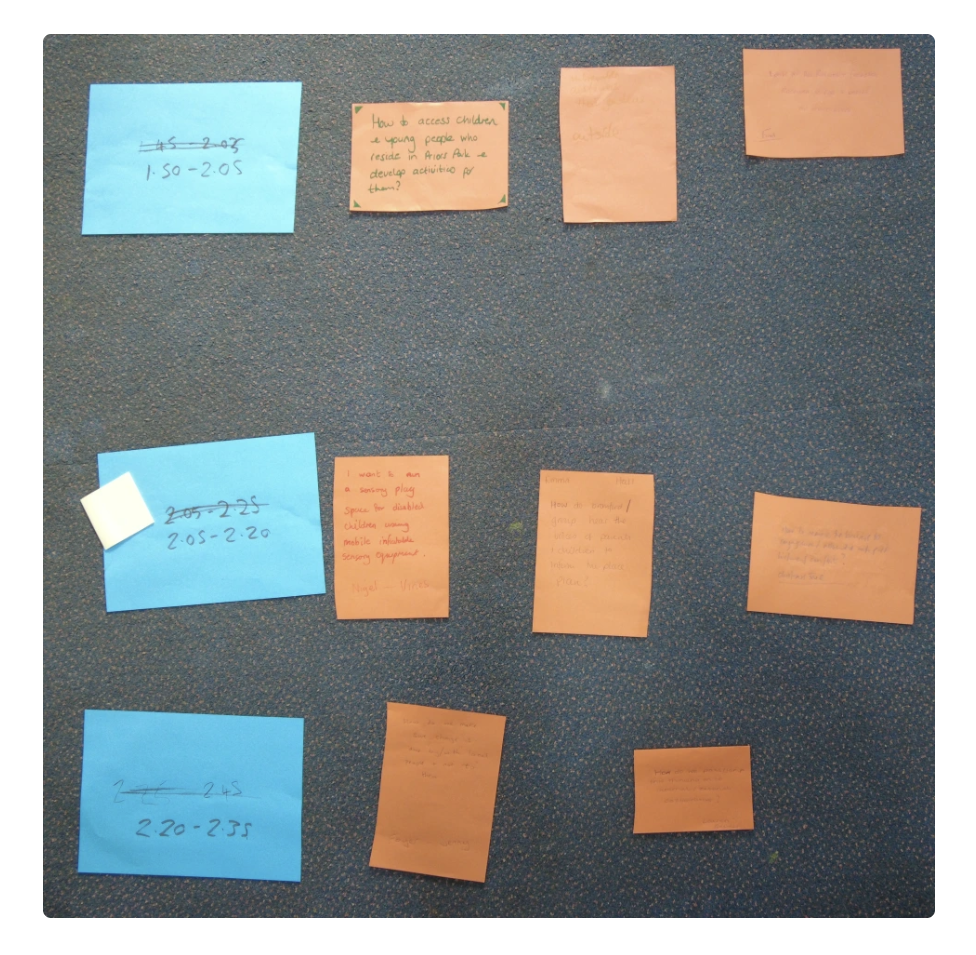
My own question centred around how we can spread the discussion that we have within these sessions across the business and beyond, with more of a focus on collaboration. Here is a whistle stop of the “golden nuggets” I collected:
Neighbourhood coaches are the bread & butter of place.
It may seem obvious, but it does still feel as though NC’s tend to fly under the radar a little when we talk about place. NC’s within this session who work in Priors Park aren’t yet seeing the full benefit of having a dedicated team or place lead like the place pilot areas have and this has led to frustration surrounding ownership, especially in terms of who is able or supposed to help them with the things they raise, which is completely understandable. Ultimately NC’s know the places the best as it is quite literally their job to immerse in the world and lives of the customers on their patch. It makes sense that the points they bring up are the most relevant to the place as often it comes straight from the customers they talk to or from what they directly see day to day. They provide the connections. They provide the view. They are on the ground. Without NC’s we aren’t truly bottom-up.
Early adopters are the key to spreading this thinking.
Again, it may seem obvious, but place is currently only being adopted in its full capacity by a limited number of colleagues right now. Therefore, it is becoming more evident over time that this may make place feel very remote. Therefore, it was suggested that people within this session and part of pilots become knowledge banks and champions for work like this and actively try to spread what we learn and know to everyone else. Of course, everyone will have a different relationship with place eventually, depending on what their role within the business is but understanding these differences early on will be very important in the long-term and help to influence what everyone needs to know as we move out of our discovery phase and into full roll out.
We’re not custodians
This one was really interesting. It’s become very clear throughout these sessions that battling the old way of working and our need for control will be one of the biggest challenges in our move towards place, simply because it’s so ingrained. There have been many occasions where we’ve got carried away and started thinking of lots of solutions and new ideas to perceived problems, which in some ways is extremely positive, but it ultimately doesn’t factor in the customer voice and still dilutes us down to being a service that’s there to fix and not a member of the community that’s there to help. Ultimately, we decided to go on this journey towards place through an acknowledgement that it is 100% possible for us to perform better but that will require putting control back into the hands of the people who our actions directly impact.
As we develop place-based working the more it becomes clear that we are working mostly in a grey area, where we don’t know everything and that if we truly want to work in a bottom-up, strengths-based way we need to acknowledge that a places base-line is largely outside of our control. The needs and wants of a place have to be built upon rather than moulded into what we think it should be based on our own opinions, assumptions and surface level data. It’s growth, not change, using what’s already there, the identity that already exists and helping it to flourish by contributing our own expertise, skills, connections and ideas. Everyone commented that Priors Park was a nice community outside of what we as a business choose to focus on, a statement that is probably applicable to most other communities across the country, pointing towards how we need to be looking at the wider pictur and not just “problem areas”.
I’ll be back in January for our fourth session, but if you have any thoughts or questions in the meantime, please drop a comment or message me directly. We’re really keen to see what other’s think about all of this.