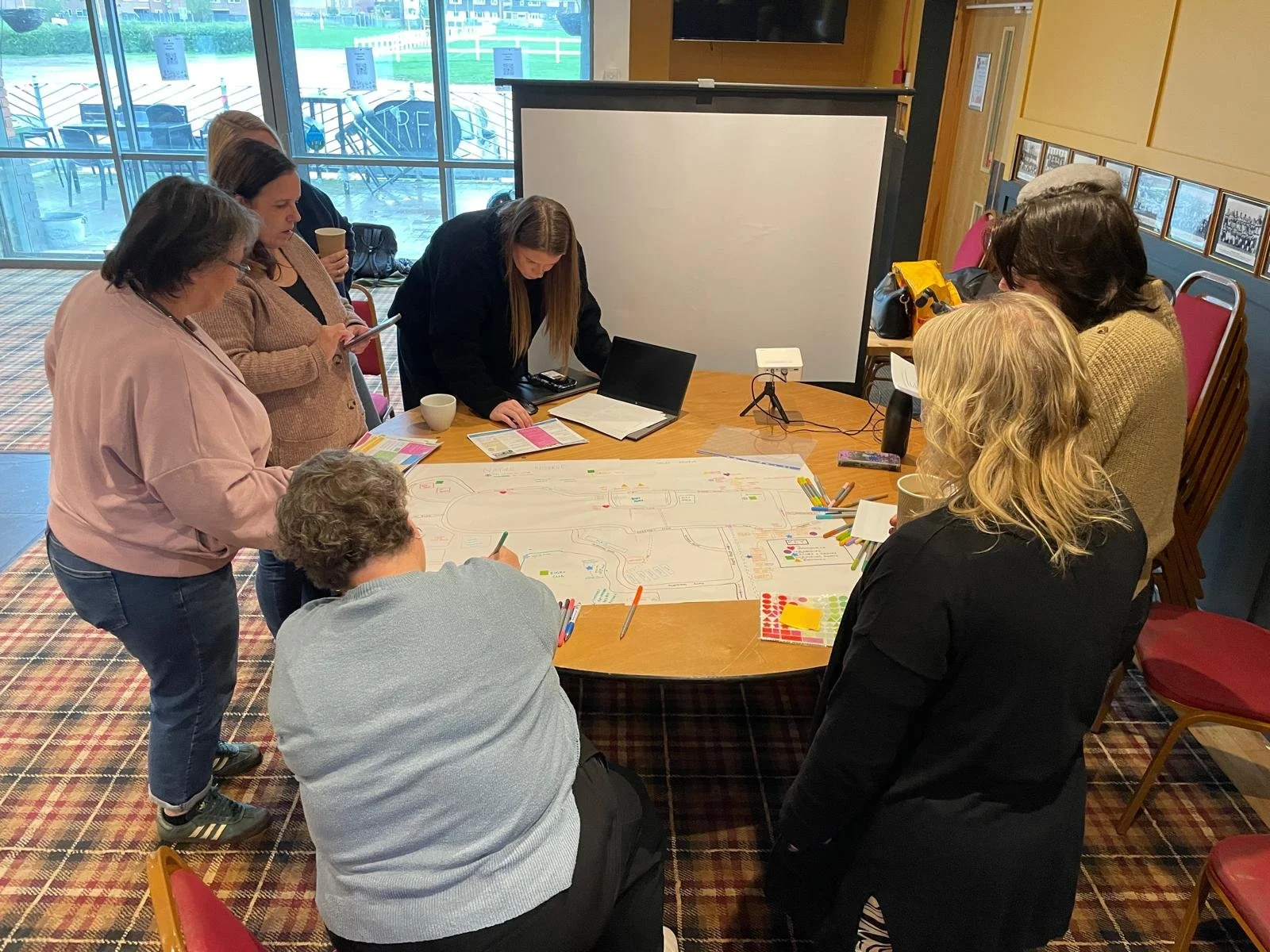
On Tuesday 18th November I attended the second session of our Priors Park place sessions, this time hosted at the wonderful Tewkesbury Rugby Football Club, to continue our exploration of place plans and what the process of creating them could look like. If you haven’t already, you can read part one here as it provides a lot of the context behind what I talk about below, as well as why these sessions are crucial in the development of place as we move forward.
Once again, the session was run by the amazing Rich Holmes from Go Together, who in this session drew our focus towards how individuals, in this case colleagues, customers and other residents within Priors Park, work in tandem to influence and contribute to the unique assets, skills and strengths within their community. This led beautifully onto the task of asset mapping, in which we worked with the ABCD principle to identify what these unique aspects of Priors Park were, using a combination of second and first-hand research, as well as existing knowledge.
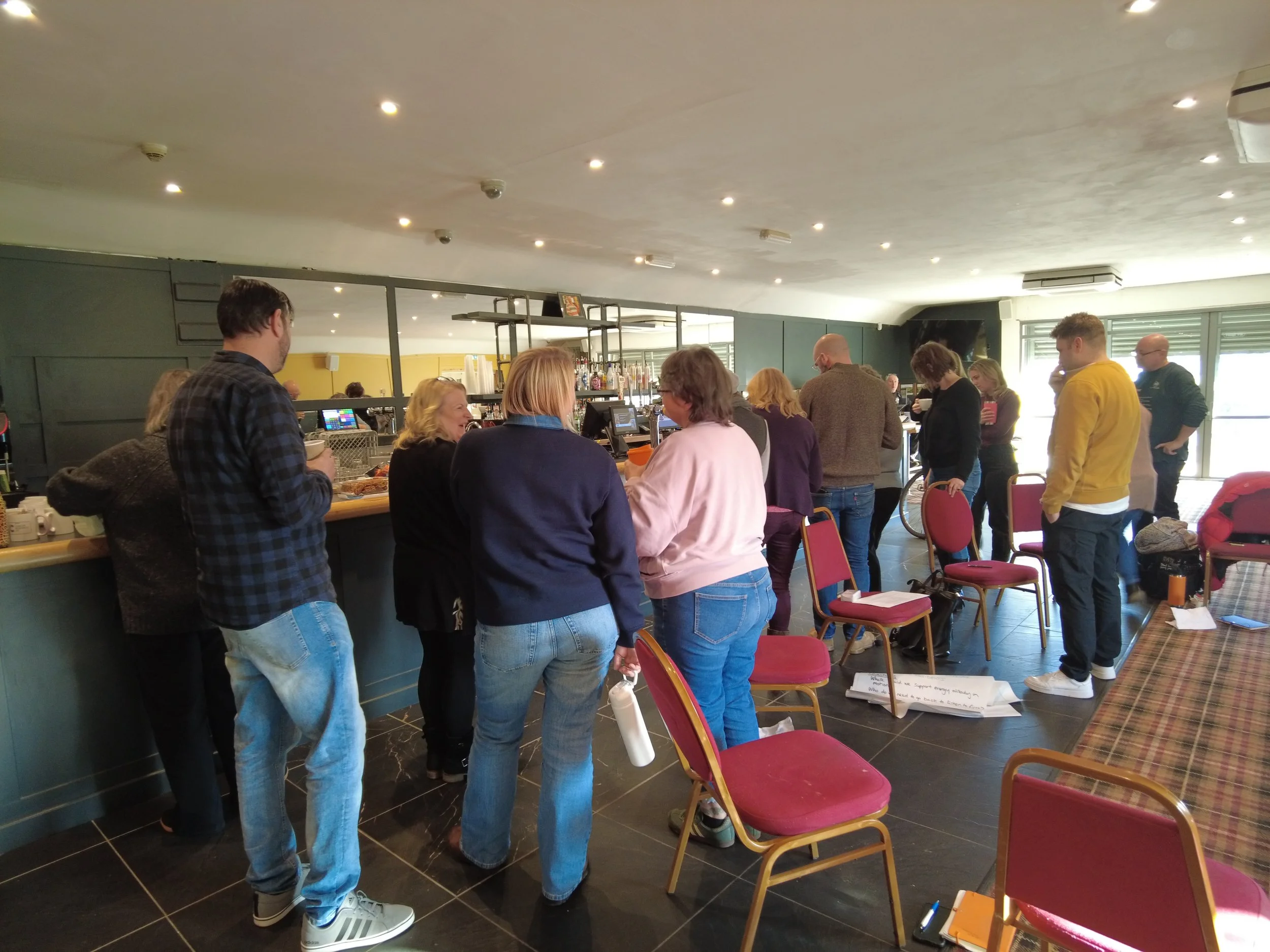
The main shift we had to consider during these tasks was our move from a deficit and needs-based to approach to an asset and strengths-based approach. This was discussed in length during our last session together, where the conclusion was that focusing on assets and strengths is always going to be more beneficial if you plan on building strong, long-lasting relationships within a community. Of course, problems and instabilities still must be acknowledged, but if you are basing their improvement off solutions that potentially already exist and tie in with the identity of the place they’re happening in, it is a lot more effective at addressing them.
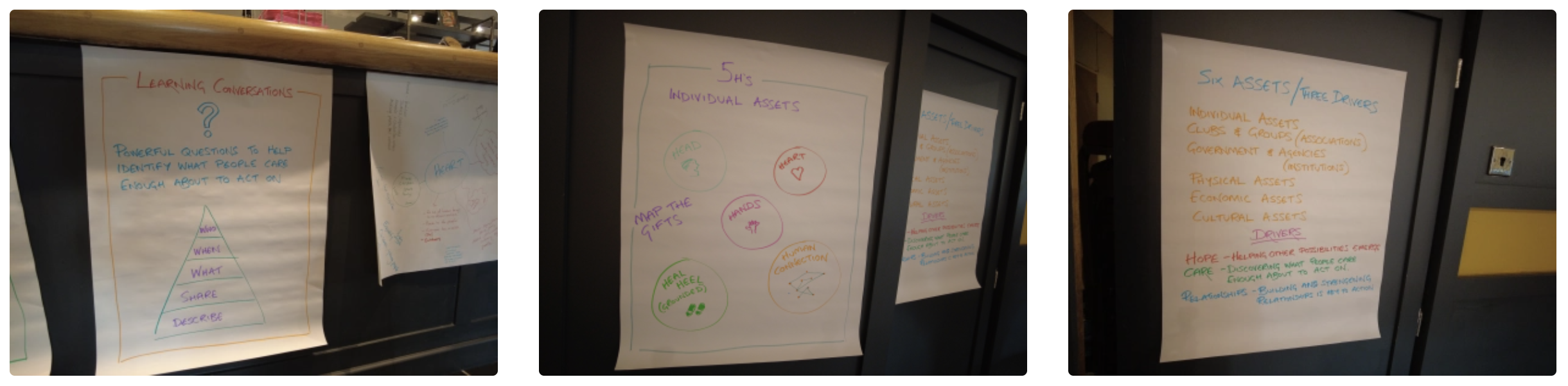
This comes off the back of thinking of ourselves as assets as well, instead of solely physical places, clubs/groups and organisations. It significantly broadens the capabilities present within a place and begins to help us move away from the ‘fix it’ status, where residents and sometimes even colleagues feel on the backfoot from the outset and often want to preserve one-way services as solutions. This exercise aids to flip this mantra on its head, restoring acts of service as a basis for connection rather than a dispensary. Each of us possesses knowledge, skills, motivations and passions other people and teams may not and this can pose a significant advantage if utilised correctly.
Place-based working’s strength was the most prevalent in the asset mapping task.
We were split into 3 groups: each with a place to go.
Group A South: Children’s Centre, School, Pharmacy, shop cluster
Group B North: Lanes Court, Abbey, Vineyards, green spaces
Group C Stay: Rugby Club to create the map.
(Group A and B to feedback to C at homebase via WhatsApp.)
And we looked at mapping the following:
Individual assets (e.g. the skills, talents, abilities and passions of community members)
Local community groups and networks (e.g. social services clubs, mums & bubs groups, sporting clubs etc)
Local government and non-government agencies (e.g. churches, schools, departments, neighbourhood centres etc)
Physical assets (natural and built environment)
Economic assets (productive work of individuals, consumer spending power, local businesses)
Cultural assets (local stories, heritage, identity, values)
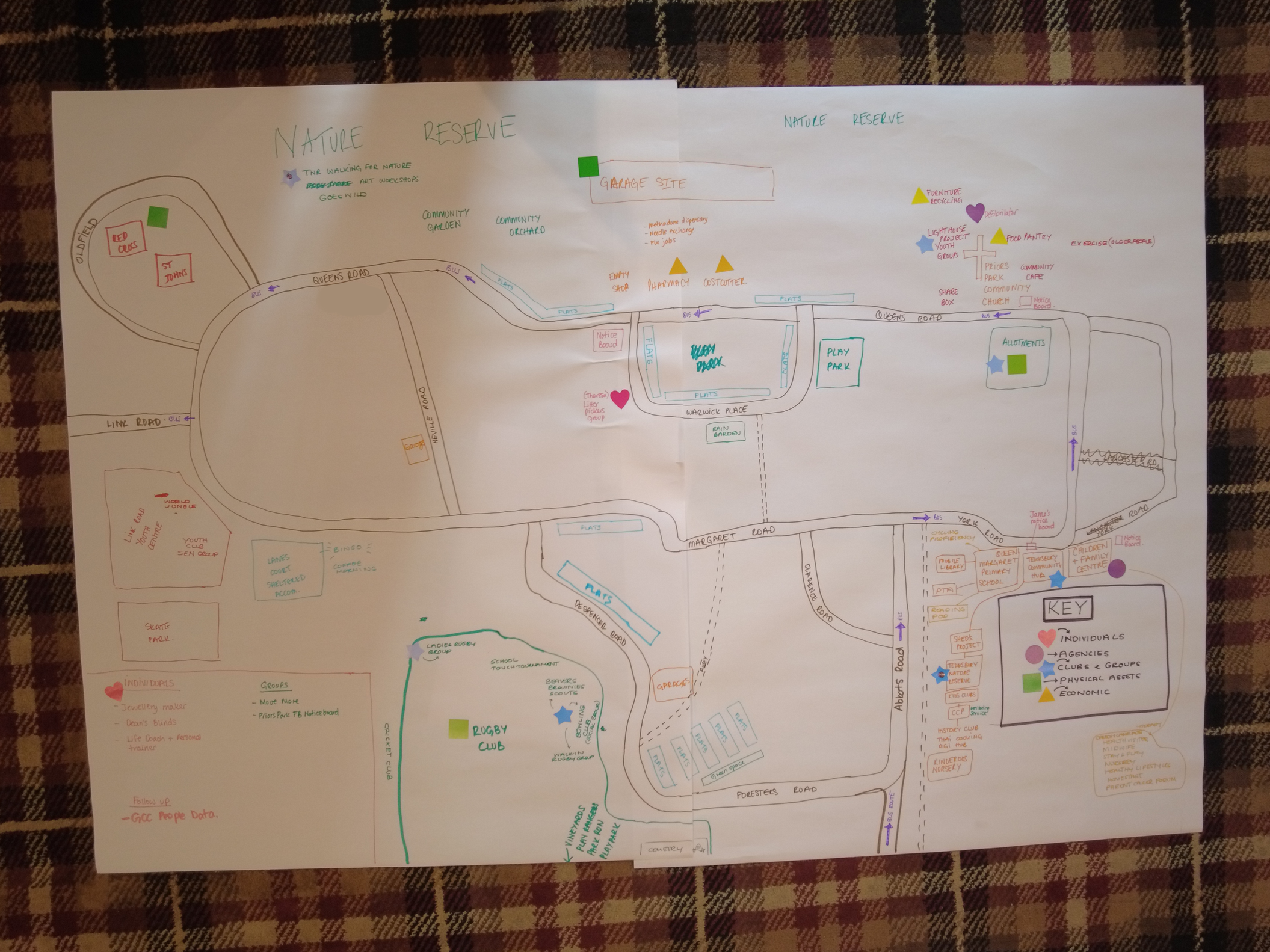
As someone who works on the periphery of Priors Park I stayed in Group C at the Rugby Club and it was great to see how place opens areas of knowledge within colleagues that they perhaps don’t get to use that often. I was highly reliant on the colleagues around me who knew a lot more about the area than myself to not just guide me around the map we’d drawn but to also tell me where all the assets were. Obviously, a quick search on google would have revealed a few of the buildings, clubs, orgs etc. as well as surface level information from websites and social media, but would completely fail to tell me anything about them on a deeper level. Whereas residents and colleagues who worked there were able to say what spaces certain clubs shared/ran out of, who runs them/gets involved with them, whether they are popular or not, whether any information presented online was outdated etc.
This is why place is important as this understanding could only be accessed through the people who work/live/operate in Priors Park. Without that, I’d be none the wiser. The best part: all the knowledge was already there, it was just about asking the right questions, with a clear purpose, and allowing people the time to express.
The conclusion of the day was that discovery leads to opportunity, but the missing piece is the middle, CONNECTION. Place plans and mapping assets will not just be about collecting more information for another directory; but weaving everything together into tangible networks away from the noise of measurables and towards the telling of stories. However, the next question is precisely that: what questions do we need to ask to evoke these stories and get residents involved with this whole process?
We will meet again next month for our third workshop to discuss exactly this, this time moving into the community church, a space that was identified in this session as a huge hub within Priors Park for different people and clubs alike. So as always watch this space and make sure to drop a comment about your thoughts!
Extra Resources: