Guest Blog - Why Good Data Matters

In a handful of instances the lab has been called upon to review a pilot that's already running. The teams have wanted to make sure that when the pilots officially end we can say "Yes!" its worked or "No!" it has completely crashed and burned...

Very quickly we learned to involve Carole, Alun and Rich (Bromford's strategic research team) when it came to evidencing pilot success or failure - because they're boss at it. Play to your strengths and everything... 

By working together so closely we ended up co-developing the new 'pilot pipeline' to ensure everything we roll out has clear aims, objectives and measures of success in advance.  We're even able to test the measurements out in advance to make sure they work like they're intended to. All in the name of collecting good, robust data. 

Kindly, Alun Morris has volunteered to explain the importance of good data in this weeks lab blog - Why Good Data Matters.... 


By Alun morris

A true story. Some names have been changed.

Prologue


I put down the phone, smiling, and wait for someone to ask me about the call I’ve just taken. No-one does, so after a moment I suck air in through my teeth and chuckle loudly.

“Well well well.”

Still nothing.

“That’s interesting. Didn’t see that coming. Well, I suppose it’s only to be expected of course.”

Moira looks up from her work.

 “Sorry, were you talking to me?” she asks.

I pretend to have misunderstood the question.

“Oh, it was the just the Innovations Lab. They need someone to write a blog on dating, and they thought of me.”

“Why would anyone want you to write a blog about dating?”

I pause; I had briefly wondered about this during the course of the phone call, but had decided not to think too hard about it.

“Well”, I say, “I suppose because I’m, y’know… why wouldn’t they want me to write a blog about dating?”

“Because you’re single and haven’t been on a date since October”.

 “Well that’s true, but I fail to see how it’s relevant.”

Moira fixes me with a look somewhere between pity and exasperation that makes me feel I might not be convincing her.

I pick up my notepad. “She specifically asked me to write a guest blog called – “ and at this point I turn the notepad round so she can see what I’d scrawled on it  – “Why good dating matters”.

“Do you think there’s any chance you misheard, and you’re supposed to be writing a blog called Why Good Data Matters”?

“Oh god no, who’d want to read that?”


Why good data matters 

Here’s the classic “Relative Trains” puzzle, first published in “Finnemore’s Gazette of New Mathematical Diversions ” in June 1922.

Train A leaves Stourbridge heading towards London at 09:00 on Monday morning, travelling at a consistent speed of 30 mph. Train B leaves Wolverhampton  heading towards London at 09:45 on Monday morning travelling at a steady speed of 45mph.  London is 10% closer to Stourbridge than Wolverhampton. Which arrives first?

 If you answered, “Train A”, you’re wrong. Train A will never get there. There are no direct trains from Stourbridge to London, you have to change in Birmingham.

If you answered “Train B”, you’re wrong. Train B doesn’t exist. 

If you answered “both trains will arrive at the same time” then you’re wrong on all levels.


The correct answer was Train C, which as Finnemore puts it:

“[T]ravels at an infinite speed, and therefore occupies all points in the universe simultaneously”.

 So, what does this have to do with data? Well I was going to use Finnemore’s puzzle as a metaphor for what happens under the Bromford Deal, and show how the trains are like the members of the Deal household.

Finding out that Train A is headed towards London but will never get there is like finding out that an unemployed household member who we’ve told to join the work club in order to improve their employment prospects is currently out of work, but if we had their date of birth it would reveal that they’re only 6 weeks old.

Finding out that train B doesn’t exist is like finding out that the customer to whom we’re currently addressing all correspondence doesn’t exist, and only appears to exist because someone passed out on their keyboard and accidentally created a new entry in contact database. 

Train C represents all those customers who are living in our homes without our knowledge – not as squatters, but just as missing household data (for example, one or more of train A’s parents are probably living in the household too). That would have been the metaphor, but I haven’t really got the hang of metaphors yet, so there it is. More of a simile I suppose.

Those of you who remember welfare reform can probably see how the above instances of incomplete, incorrect and missing data might cause problems.

For example when we were calculating the likely impact of The Bedroom Tax we needed to know the age, gender and relationship of all the trains in our properties. We didn’t have much of the data we needed, meaning that our initial estimates… actually our initial estimates were pretty good, even though I used a random number generator to come up with them. So that’s a bad example. However, due to a weird statistical fluke, the underoccupation data we got back from the first few local authorities to share their information with us showed that for those particular LA’s our estimates were a long way out, and we were underestimating the problem by about 33%. So at that point we had to draw up a worst case scenario in which our estimates for all other LA’s were  also out by 33%. And let me tell you, when your figures for the potential rental income risk from welfare reform are based on the results of a random number generator plus 33%, they make for pretty scary reading.

So, what does all this mean for you? In your day to day job, how does it impact on the business if you don’t collect accurate data? I don’t know, that depends on who you are what your job is. I’m pretty sure that if we were having this conversation one-to-one I’d be able to come up with some pretty good examples of the importance of good data entry that apply specifically to your role.  


Epilogue

I stand waiting for the door to the Innovations offices to open. My pass doesn’t work on the 5th Floor at Exchange; I’ve heard rumours that no-one’s pass works here; that there always has to be at least one colleague inside to let people in. Personally I think this is rubbish, and subscribe to the theory that whichever member of the Innovations Lab arrives first each morning has to scale the outside of the building and force a window open.

After a minute or so a hatch slides back, revealing a letterbox sized hole in the door at around eye height. It’s filled by a face I don’t recognise.

“What do you want?” asks the face.

From inside the office I hear what sounds like [REDACTED], accompanied by a peel of maniacal laughter. I’m pretty sure I also hear someone say [REDACTED]. 

“What was that?”

“Nothing. Go away.”

“I… I have a blog? I was going to email it but I was told you’ve gone ‘off grid’ ?”

“Give it here!”

I reach up to hand the sheet of A4 through the gap. As my hand reaches the letterbox the face sticks its own hand out, grabbing my wrist.

“Give it here, give it here.” My arm is pulled through along with the paper.

“Go away! Go away! Shoo.”.

It lets go of me, and I retract my arm hurriedly. The hatch is quickly closed. I breathe a sigh of relief and head back down to relative the safety of the basement, pretending not to notice the bitemarks on my fingers.

 

Swarm Test - Office of the future

By Amy Morgan

The office of the future is an idea that is spoken about a lot so it was only a matter of time before the Lab touched on this subject. However, we didn’t want to take someone else’s approach and try and fit it in to us. Plus we wanted the business to take ownership of this one rather than us squirreling away ideas; so we were thrilled when our facilities team asked us to bring this idea into the Lab environment.

This was a great opportunity to test out a swarm style session. We sent out an open invite across our internal social network and our colleagues didn’t disappoint. Our aim was to get 10 colleagues, as diverse in roles as we could. The result was 25 colleagues stepped forward.
After a short briefing and a video to get their imagination going we split the group into four pre-determined groups, making sure as much as possible we had diverse workers in each; for example someone that worked remotely, in a managing position, ICT based, customer facing and someone who is continuously stuck to calendars like myself!

The approach was simple; if the offices burnt down tomorrow what would you need to be able to do your job? Once that was established everything else could be changed.

The results were incredible, with 34 unique ideas found in one hour. It’s note worthy that not one person mentioned desks, either changing their desk or even needing one! All the ideas were based around the need to make work work for them and breaking the habits we have set ourselves.

A common suggestion was to scrap the 9-5 and allow for open working hours; the emphasis being placed on getting your workload done rather than sticking to 8 hour days. Our colleagues wanted to flip the norm on its head and make working remotely the everyday and the office out the ordinary and with the roll out of portable devices to all Bromford colleagues they really felt that attitudes could change.

To make this happen they recognised the need for a culture shift. Perhaps educating people on what alternatives there are to sitting in meetings face to face or leading from the top down to not feel like if you are working away you need to prove your worth could both help.
Some more techy suggestions were also made to try and achieve this. For example a booking app so they could access available space ad hoc, multi- conferencing facilities and perhaps even a mayday button (think like Amazon help on a Kindle Fire) so our contact centre colleagues can work wherever too. For our repairs team, what about a 3d printer on the back of the van to create instant parts for repairs.

On the rare occasion they wanted to be in ‘the office’, they wanted it to be a collaborative space. One suggestion was to keep the big spaces we have available but break them up into zones of working to fit with their mood. So quiet zones, active areas, sociable sections and break out space. They likened it to an Ikea showroom, with clear styles for each type of zone and an emphasis on flexible docking stations. It was pointed out how we are currently not very good with outside space and they would like to see more of it – places to work on sunny days or to relax on a rooftop garden. Also, they didn’t want to feel tied in to using our offices so suggested buying office space from other businesses to increase our location and extend our network or even being given a coffee allowance to support local coffee shop businesses.

There is a lot that can be done with how we work and it would be easy to run away with all these ideas but best to take a breather first. So our project team are taking on the challenge of collecting data on how we currently use our spaces to understand where we are at right now and how we can build on it with all these wonderful ideas.

Finally we want to extend a big thank you to the Facilities Team and all our volunteers for their input.

The Future of Drones in the USA

Following our #drone experiment, we were contacted by Todd Medema, a tech entrepreneur in the USA and self confessed drone enthusiast.  He provides honest and down to earth technology reviews on Tech Gear Guide to help you make decisions about which bits of tech to buy.  

Todd wanted to share what is happening in the USA. Unlike in the UK, where the regulating body is the CAA (Civil Aviation Authority),  the airspace there is regulated by the FAA (Federal Aviation Administration). 

How Drones are Fighting to Change the World 

Early on a Monday morning in Washington D.C, a recreational Drone enthusiast lost control of his craft causing it to crash land in the front lawn of the White House. Uproar stirred across the political landscape and a familiar question was being asked on a larger podium than ever before: Are recreational drones safe and should we be regulating their use more strictly?

Of course the crash was completely harmless but it represents a question of safety that many are eager to answer.  How can we safely regulate these devices? Is the tech too advanced and potentially dangerous for the average untrained consumer? Should we provide licensing regulations and mandatory classes on proper use? The answer is unclear but what is clear is, like it or not, consumer drone use is here to stay.

Why we love them

Drones are a great hobby for people searching out new perspectives on the world around them. Sure they’re fun to fly around but for most, the real treasure lies within aerial videography. This exciting new hobby has captured the attention of millions with enthusiasts spending upwards of thousands in the pursuit of unbelievable videos.

The most popular means to create this stunning videography is to combine a professional grade drone with a GoPro camera. Simply turn it on and it’s practically impossible to not get stunning results.

Before drones, videos like these would not have been possible without renting a helicopter, which was of course virtually impossible for the average consumer.

Drone technology has opened the doors for an entirely new form of creativity and exploration.

Why they’re controversial 

There are some immediately obvious implications that appear when providing this kind of technology to anyone with a few spare bucks.  Having a floating video camera forces us to ask questions about our privacy we’ve never been faced with before.  Many fear that having a camera on a quadrocopter could lead to videos through our windows or even just watching us go about their daily lives on the street. No one likes to feel watched so regulating what and where we can record video seems inevitable.

In 2011 a drone videographer named Raphel Pirker was fined by the FAA to the tune of $10,000 for using a drone to film a promotional video for the University of Virgina.  Outraged, Raphel took the FAA to court and contested that the US government was operating under outdated laws from the 1980’s that were originally intended for model airplane use. On top of this, the ‘laws’ they were enforcing were not even enforceable by the government as they were merely guidelines and carry no force of law behind them.  The court ruled in favor of Mr. Pirker and dropped all charges against him.              

Now, as this ruling may seem advantageous for hobbyists across the globe, it’s sparked the FAA to begin a ‘roadmap’ to much more strict laws against recreational drone use. There are talks about putting regulations as strict as prohibiting flying at all without a license. Naturally, enthusiasts are not a fan of these propositions but luckily few of these laws will be able to even see the light of day before 2017, so many are working as hard as they can to keep these laws stifled before then.

The FAA claims that drones represent a risk for commercial airlines citing that over 200 cases have been reported in 2014 of drones getting too close to manned flights. They also cite potential terrorist hacking inceptions as a risk to all drone operators. While these are all good points of interest to consider, most enthusiasts believe some lax regulations involving clear flight patterns for commercial airlines and furthering technology into drone firewalls could prevent these issues.

The Future of Drones

The future of drones is extremely unclear for a multitude of reasons. The US government has closed off most airspace to commercial drone use, which has many potential investors in the technology waiting around for more clear regulations.  Speculators predict that if we can overcome the government’s regulations the drone industry could generate over 70,000 new jobs and $14 billion in economic activity in the United States alone. Where is all this money coming from?  From home delivery of goods to dusting crops for farmers, virtually hundreds of possibilities for revenue exist.

Just imagine the implications of having a cheap and easy to learn means of flying through the air.

  • In Southern California former Navy officers are using drones to inspect power lines.
  • Farmers are using drones to inspect their fields for dry soil or insect infestations.
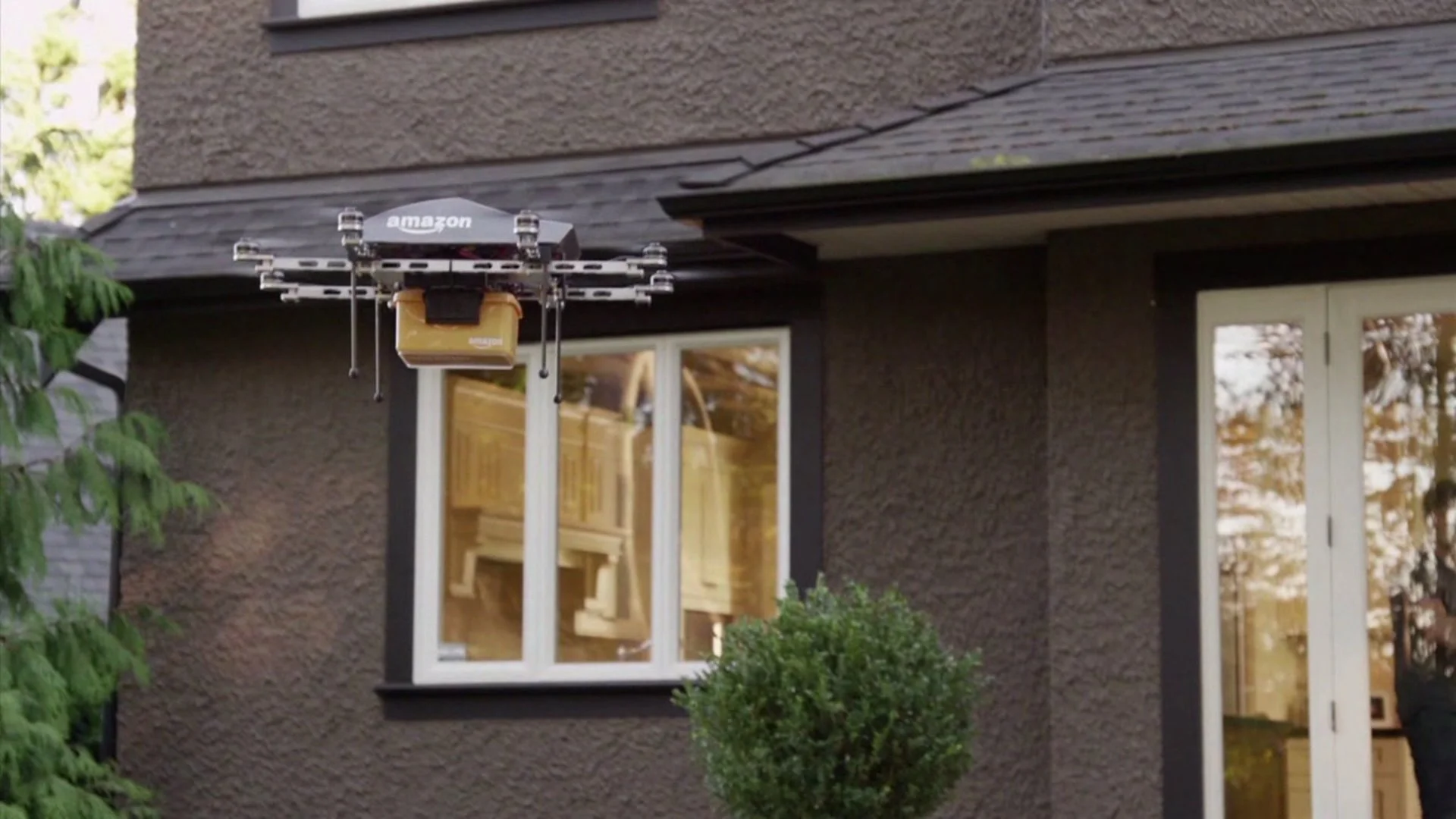
  • Amazon.com has a very publicized plan to deliver packages straight to your doorstep as soon as 30 minutes after you click the order button on their site.

Things we never imagined can all become a reality simply depending on how our government decides to treat the future of drones in the eyes of the law.

For now, the future of drones is in their hands.

Let’s hope they treat it with the respect it deserves. 

For more reviews on the latest tech, check out Todd's blog techgearguide.com